Single Seated Control Valve Design and Working Principle
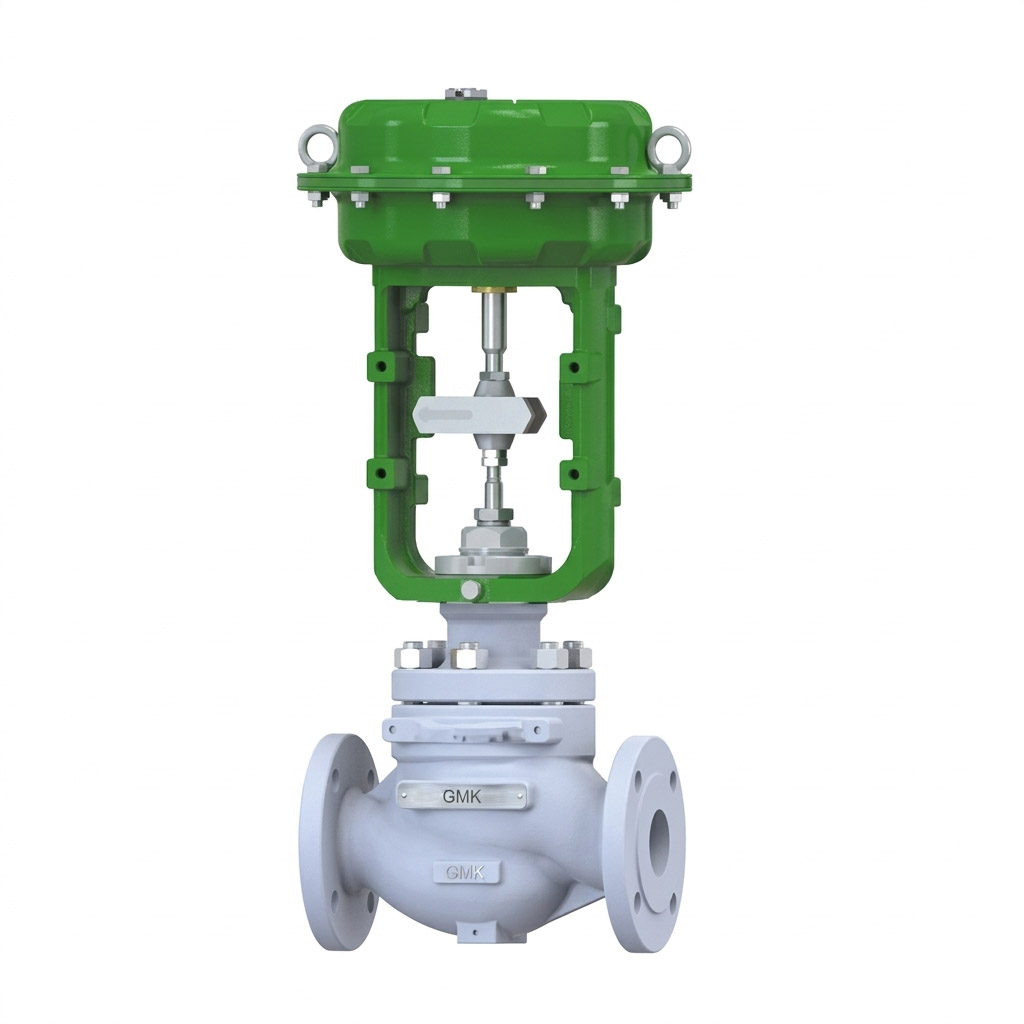
The single seat control valve uses a single-seat design to regulate fluid flow through the pipeline. This structure provides excellent control accuracy and reduces the risk of leakage during operation.
The valve is equipped with specialized cages that can support noise reduction and anti-cavitation functions. Therefore, it can operate effectively in demanding industrial environments.
Moreover, the valve design allows smooth flow adjustment with relatively low pressure loss. This makes it a practical choice for process systems requiring stable flow control.
Pneumatic Actuation and Control Performance
GMK VALVE control valve solutions can be equipped with pneumatic diaphragm actuators or pneumatic piston actuators. These actuator options provide reliable movement and accurate valve positioning.
The valve can also work with position controllers or process controllers such as PD and PID systems. As a result, users can achieve automatic process regulation and improved system efficiency.
Furthermore, different bonnet designs are available, including standard bonnet, heat dissipation bonnet, cryogenic bonnet, and bellows bonnet. These options help the valve adapt to different operating conditions.
Durable Construction for Industrial Applications
The Single Seated Control Valve uses durable materials to meet various industrial requirements. Stainless steel and carbon steel options provide suitable strength and corrosion resistance for different media.
In addition, the valve can handle challenging fluids containing slurry, polymer crystals, and high-temperature media. Therefore, it is suitable for demanding applications with strict performance requirements.
The compact structure reduces installation space while maintaining reliable operation. Moreover, the simple design allows easier maintenance and improves overall service efficiency.





 Get A Quote


 Inquire with us directly