Pinch Valve Design and Working Principle
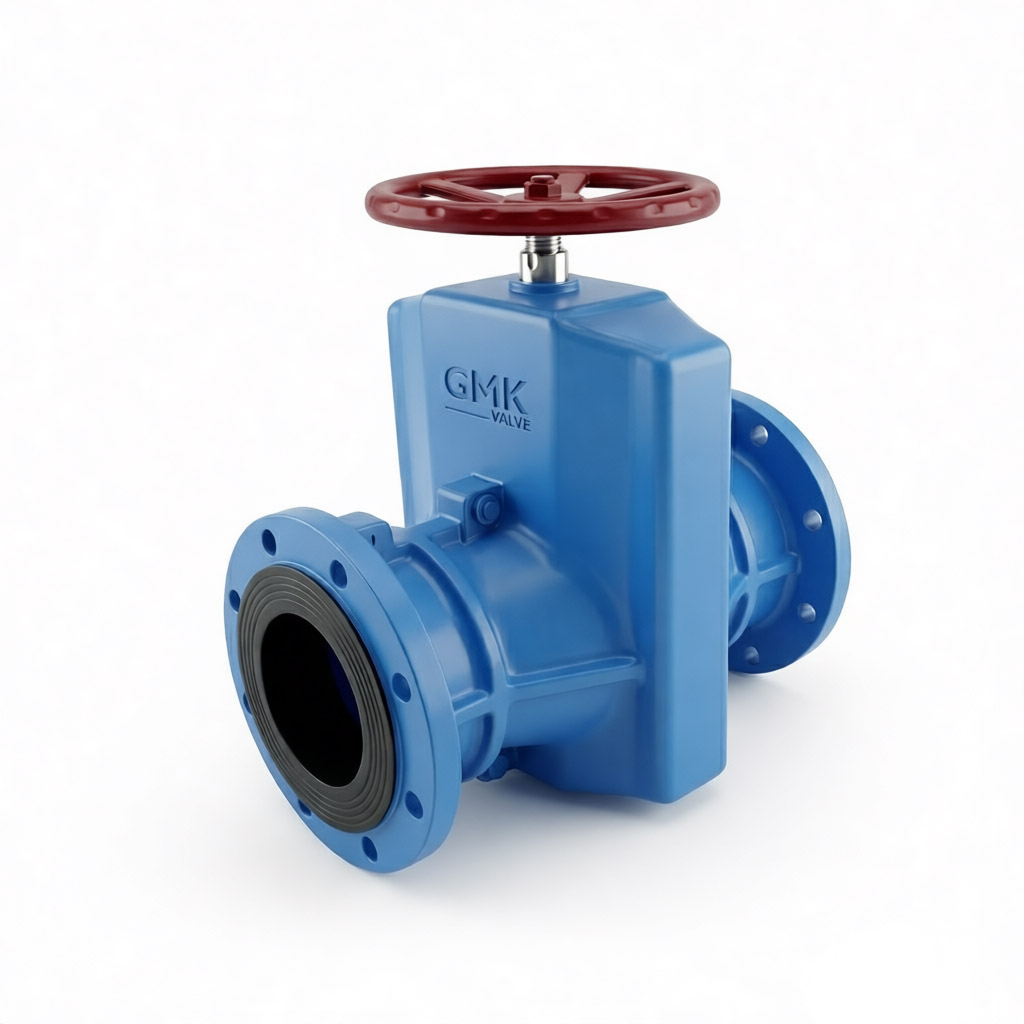
A Pinch Valve uses a flexible sleeve to control the process flow. The sleeve can close completely and isolate the pipeline when required.
The valve can operate through mechanical force or fluid pressure, depending on the selected configuration. Moreover, its simple internal structure contains no complex flow passages or moving parts inside the media path.
When the sleeve opens, the medium flows through a straight and unobstructed passage. Therefore, the valve can maintain efficient flow with relatively low pressure loss.
Industrial Pinch Valve for Slurry Applications
GMK VALVE Pinch Valve is particularly suitable for slurry and abrasive media applications. The flexible sleeve can close around trapped solids and help maintain effective shutoff.
The valve can handle liquids containing suspended particles and solid materials. Furthermore, its straight flow path helps reduce turbulence and supports stable material transport.
This design makes the valve suitable for wastewater treatment, mining, and pneumatic conveying systems. However, users should select the sleeve material according to the medium and operating conditions.
Pinch Valve for Corrosive and Sensitive Media
The process fluid remains separated from the valve operating mechanism during normal operation. Therefore, the valve can help reduce contact between the medium and metallic components.
This feature is useful when corrosion or metal contamination may affect the process. In addition, suitable sleeve materials can support applications involving demanding chemical or process media.
GMK VALVE can provide suitable configurations for different industrial service conditions. Customers should confirm the medium, temperature, pressure, and chemical compatibility before selection.
Pinch Valve for On-Off and Throttling Service
The valve can provide both on-off control and throttling service when correctly selected. Its straight-through design makes it particularly effective for applications that require frequent isolation.
For throttling applications, the effective control range can typically reach about 10% to 95% of rated flow capacity. Moreover, the actual operating range depends on the valve size, sleeve design, and process conditions.
The simple operating principle also supports straightforward flow control. As a result, the valve provides a practical solution for systems that require reliable media handling.





 Get A Quote


 Inquire with us directly